Tile Grout Cracking and Water Seeping Behind the Shower? What It Leads To
July 7, 2026
Cracking or missing grout in a tile shower lets water seep behind the tile, and that's how serious hidden damage starts. Grout and caulk are part of what keeps water out; once they fail, water gets into the wall behind the tile, where it can rot the backing and framing, grow mold, loosen tiles, and damage adjacent rooms, often unseen until it's extensive. What looks like a minor cosmetic crack is really a breach in the shower's waterproofing. Addressing it early, and ensuring proper waterproofing beneath, prevents a small issue from becoming a major repair.
That little crack in your shower grout, or a spot where the grout has crumbled or the caulk has pulled away, is easy to dismiss as cosmetic. But if water is getting behind the tile through it, it's the start of a problem that can grow far bigger than a cosmetic flaw, out of sight, inside the wall. It's one of those small bathroom issues that quietly leads to expensive damage.
The reason is that grout (and caulk) are part of how a tile shower keeps water out. When they crack, crumble, or fail, water finds its way behind the tile, and behind the tile is exactly where you don't want water. There it can damage the wall structure, grow mold, and loosen the whole tile installation, usually without any obvious sign until it's advanced. Understanding what cracked grout and water behind the tile actually leads to is what makes clear why it's worth addressing early rather than ignoring. Here's what's really going on behind that failing grout.
Why Cracked Grout Is More Than Cosmetic
To see why a grout crack matters, you have to understand what grout and caulk do in a shower, because it's more than filling gaps.
A tile shower keeps water out through a system: the tile surface, the grout between tiles, the caulk at corners and joints, and, critically, a waterproof barrier behind the tile. The grout and caulk are part of the water-resistant surface, they help keep water from getting through to the wall behind. So when grout cracks, crumbles, or goes missing, or caulk fails, it creates a path for water to penetrate past the tile surface. What looks like a small cosmetic crack is actually a breach in the shower's defenses against water.
That's the key point: cracked grout isn't just an appearance issue, it's a potential entry point for water into the wall. Whether it becomes a serious problem depends partly on what's behind the tile (a proper waterproof barrier can still hold water back even if grout fails), but a failing grout line is a warning that the shower's water resistance is compromised at that spot. Treating it as merely cosmetic misses what it can lead to, water getting where it shouldn't.
What Water Behind the Tile Leads To
Once water gets behind the tile, through failed grout or caulk, it can cause a cascade of hidden damage. This is what makes it worth taking seriously.
Rot and structural damage
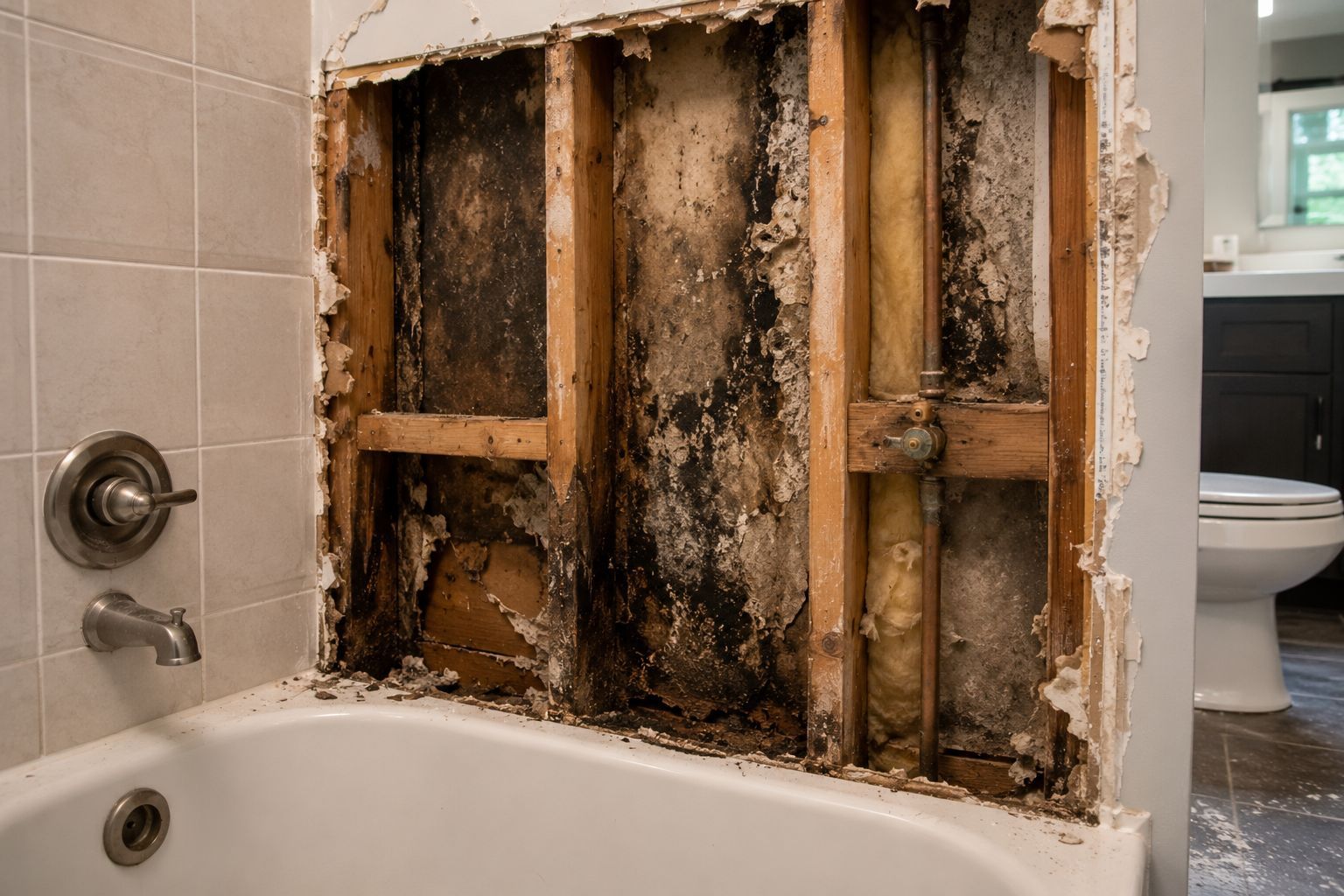
Water reaching the wall behind the tile can soak the backing board and the framing (studs) behind it. Over time, that moisture rots wood framing and deteriorates the backing, damaging the structure of the wall, a serious, hidden problem.
Mold growth
The damp, dark space behind the tile is ideal for mold. Water intrusion behind a shower is a common cause of hidden mold growth in the wall, which can spread and affect air quality, all out of sight.
Loosening tiles and failing installation
As water damages the backing the tiles are attached to, the tiles can loosen, and the whole tile installation can start to fail, leading to bigger tile repair or replacement.
Damage beyond the bathroom
Water behind a shower doesn't always stay there, it can travel, damaging adjacent walls, the ceiling of a room below, or flooring, spreading the problem into other parts of the home.
Hidden and advancing
Crucially, most of this happens unseen, inside the wall, so it can advance significantly before there's an obvious sign (a soft spot, a stain, loose tiles, a musty smell). By the time it's visible, the damage is often extensive.
The theme is that a small breach, cracked grout letting water behind the tile, can lead to rot, mold, tile failure, and spreading water damage, largely hidden until it's a major repair. That progression from minor to major, out of sight, is exactly why cracked grout and water intrusion are worth addressing early.
TIP: Watch for the early clues that water may be getting behind your shower tile: grout that's cracked, crumbling, or missing; caulk that's pulled away, cracked, or moldy at corners and joints; tiles that sound hollow or feel loose; discoloration or staining; a persistent musty smell; or any soft spot on the wall. Also look for signs in adjacent rooms, a stain on the ceiling below a second-floor bathroom is a red flag. Catching these early, before damage spreads inside the wall, is the whole point.
Why Addressing It Early Matters, and What a Real Fix Involves
The case for acting on cracked grout and water intrusion early comes down to the difference between a small fix now and a major repair later, and to fixing it properly, not just cosmetically.
Caught early, a grout or caulk problem, before water has done significant damage behind the tile, is a far smaller matter to address than the rot, mold, and tile failure that develop if water keeps getting in. Because the damage is hidden and progressive, every bit of delay lets it advance unseen. So addressing failing grout and caulk promptly, and stopping water from getting behind the tile, is what prevents the small breach from becoming a wall full of rot and mold and a failed shower.
But it's also important that the fix is a real one. Simply re-grouting or re-caulking the surface may help, but if water has already gotten behind the tile, or if the underlying waterproofing was inadequate, a cosmetic surface fix won't address the damage behind or the root vulnerability. A proper repair looks at whether water has already caused damage behind the tile and ensures the shower is properly waterproofed, so water is actually kept out, not just have the surface patched. For significant grout failure, signs of water damage, or a shower that keeps having problems, that means assessing what's behind the tile and addressing the waterproofing, which is where professional bathroom expertise matters. Fixing it right, early, is what protects your bathroom and home from the hidden damage water behind the tile causes.
WARNING: Don't dismiss cracked, crumbling, or missing grout, or failed caulk, in a shower as merely cosmetic, it can be letting water behind the tile, where it causes hidden rot, mold, and structural damage that's often advanced before you see it. And be cautious about assuming a quick surface re-grout or re-caulk fully solves it; if water has already gotten behind the tile or the waterproofing beneath is inadequate, the real problem continues out of sight. Signs of water damage, loose tiles, or persistent issues warrant assessing what's behind the tile, not just patching the surface.
Frequently Asked Questions
Is cracked grout in my shower really a problem?
It can be, because grout (and caulk) are part of what keeps water out of the wall behind the tile. When grout cracks, crumbles, or goes missing, it creates a path for water to get behind the tile, which is a breach in the shower's water resistance, not just a cosmetic flaw. Whether it becomes serious depends partly on the waterproofing behind, but it's a warning worth heeding.
What happens when water gets behind shower tile?
It can cause a cascade of hidden damage: soaking and rotting the backing board and wood framing, growing mold in the dark, damp space, loosening the tiles as their backing deteriorates, and even spreading to damage adjacent walls, ceilings below, or flooring. Most of this happens unseen inside the wall, so it can become extensive before there's an obvious sign.
How do I know if water is getting behind my tile?
Watch for cracked, crumbling, or missing grout; caulk that's pulled away, cracked, or moldy; tiles that sound hollow or feel loose; discoloration, staining, or a soft spot on the wall; and a persistent musty smell. Signs in adjacent areas, like a ceiling stain below an upstairs bathroom, are also red flags. These clues suggest water may already be getting behind the tile.
Can't I just re-grout or re-caulk it myself?
Re-grouting or re-caulking the surface can help and is worth doing for minor issues, but if water has already gotten behind the tile, or the waterproofing beneath is inadequate, a surface fix won't address the hidden damage or the root vulnerability. For significant grout failure, signs of water damage, or recurring problems, a proper fix means assessing what's behind the tile and ensuring real waterproofing, not just patching the surface.
Why is hidden water damage such a big deal?
Because it advances out of sight. Water behind the tile rots framing, grows mold, and loosens tiles inside the wall, where you can't see it, so by the time there's an obvious sign (soft spot, stain, loose tiles, musty smell), the damage is often extensive and the repair major. That hidden, progressive nature is exactly why catching and fixing the source early is so valuable.
How urgent is it to fix cracked grout?
Worth addressing promptly. Because water intrusion behind tile causes hidden, progressive damage, delay lets rot and mold advance unseen, turning a small grout fix into a major repair. Caught early, before water has done significant damage, it's a far smaller matter. So while a single hairline crack isn't an emergency, failing grout and any signs of water getting behind the tile shouldn't be left indefinitely.
What does a proper fix involve?
Stopping water from getting behind the tile and ensuring the shower is properly waterproofed, plus addressing any damage water has already caused behind the tile, not just patching the surface. For minor grout issues that's simple maintenance; for significant failure or signs of water damage, it means assessing what's behind the tile and correcting the waterproofing, which is where professional bathroom expertise comes in.
Don't Let a Grout Crack Become a Hidden Disaster
A cracked grout line or failed caulk in your tile shower may look cosmetic, but if it's letting water behind the tile, it's the start of hidden damage, rot in the backing and framing, mold in the wall, loosening tiles, and water spreading to other rooms, most of it advancing unseen until it's a major repair. Grout and caulk are part of the shower's defense against water, so their failure is a breach worth taking seriously. Catch the signs early, address failing grout and caulk promptly, and make sure the fix truly keeps water out, waterproofing and all, and you turn a potential hidden disaster back into a small, manageable bathroom maintenance item.
Stop water behind your shower tile before it becomes hidden damage — Cracked grout and failing caulk can allow water to seep behind shower tile, where it may quietly damage framing, promote mold growth, and loosen tiles over time. Surface repairs alone won't solve hidden moisture issues already inside the wall. With 22 years of experience, River City Bath provides expert shower waterproofing services in South Park Township, Bethel Park, Jefferson Hills, and the greater Pittsburgh south suburbs, identifying water intrusion and correcting the underlying cause for long-lasting protection. Reach out today for a bathroom assessment before a small grout crack turns into a costly repair.